Learn Database Management Systems for Enhanced Data Control
Introduction
In today's world, all business operations depend upon managing and controlling information. A small startup to a multinational organization requires an ability to store, retrieve, and analyze data for any competitive advantage. Thus, database management systems- powerful tools to organize, secure, and process data with great efficiency-step in here.
We are going to discuss how DBMS can change data management, and what are its primary features and how to make the right choice for your business in this guide.
1. What Are Database Management Systems (DBMS)?
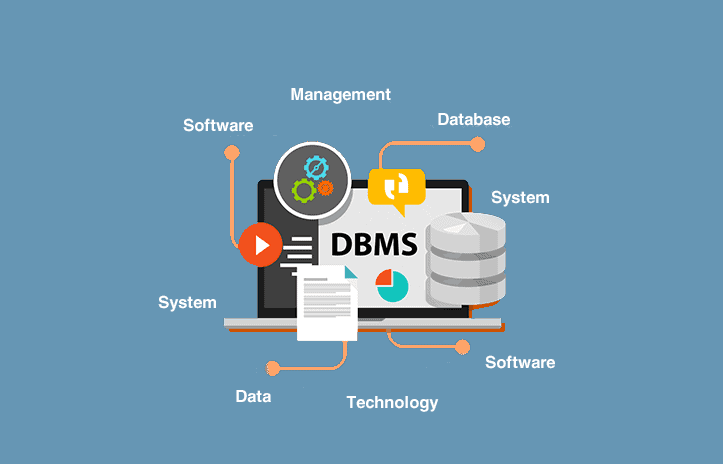
Database Management Systems are software products that allow organizations to store, organize, and access data in a structured manner. They are an interface between the users and databases and enable the efficient handling of data without requiring technical know-how.
Core Elements of a DBMS
Database: The actual data placed in structured or unstructured formats.
DBMS Software: Tools for managing data: entering, updating, or retrieving it.
Users: People, or applications that interact with the DBMS on tasks.
DBMS enhances workflows by eliminating redundancies and making data accessible, reliable, and secure.
2. Advantages of having a Database Management System
There are many advantages to implementing a DBMS:
Centralized Data Management: All data can be put into one platform, thereby avoiding silos and enhancing collaboration.
Improved Data Security: It will ensure that the sensitive information is secured and only accessed through role-based access and encryption.
Scalable: This can easily manage growing volumes of data as your business grows.
Efficient: The processes are automated, and with very minimal human errors in data entry, hence saving on data entry errors.
Actionable Insight: The analytics features improve, which make it easier to draw trends and patterns for better decision-making.
A good DBMS will keep your data clean and well-organized but also contributes heavily to your business success.
3. Categories of Database Management System
Every type of business has different data management requirements, and this is addressed by various kinds of DBMSs.
Relational DBMS: Uses structured tables for holding data; it is suitable for keeping financial records or a customer database.
NoSQL DBMS: Supports unstructured data in the form of social media posts, logs of IoT devices and so on; flexible and very scalable.
Hierarchical DBMS: Data is stored in a tree-like form; very commonly used in telecom and banking.
Object-Oriented DBMS: Data storage in the form of objects; ideal for multimedia or scientific applications.
Cloud-Based DBMS: Provides remote access to data storage and management, promising scalability and flexibility.
You would choose the appropriate DBMS for your kind of industry, type of data, and special requirements.
4. Features of State-of-the-Art DBMS
The state-of-the-art DBMS, being modern, has these features that make them effective and user-friendly:
Data Back-up and Recovery: Which prevents loss of data due to some form of cyber attacks.
Data Integrity and Consistency: Ensures that the information obtained is correct and reliable.
Optimize Queries: Optimizes processing and thus accelerates query or data retrieval.
Interoperate: Relieves work-integration with other application-based systems, for instance ERP or CRM.
Automate: Avoid duplicate effort wherein user intervention may involve processes like updation and also indexing.
All these features have made it pre-requisite of today business world wherein DBMSs are needed for ensuring appropriate reliable data management and its effective control.
5. Optimizing DBMS Techniques- Best Practices for Ensuring Maximum Data Management
The following best practices are used to provide optimum utilization of DBMS:
Regular Backup: Maintain regular backup so that data will not be lost in case of an unplanned incident.
Implement Access Controls: Access to sensitive data must be restricted to authorized personnel.
Optimize Performance: Use indexing for faster database queries, which will ensure smooth operation.
Maintain Data Quality: Regular cleaning and updating of records to eliminate duplicate entries and outdated information.
Train Your Team: Equipping the employees with skills needed to use the DBMS properly.
These practices will ensure that your DBMS works effectively and provides maximum value.
6. Selecting the Right DBMS for Your Business
Selecting the right DBMS depends on understanding your business needs and considering the available options:
Know Your Needs: Establish the volume of data, access requirements, and growth projections.
Most Used: Compare functionality and cost of the most used DBMSs: MySQL, MongoDB, Oracle, and PostgreSQL.
Consider Integration: The DBMS should integrate easily with your other tools and systems.
Vendor Support: Choose a system that gives strong customer support and a large user base.
A DBMS is one that satisfies your business needs and grows with your growth.
7. Future Trends in Database Management Systems
Data management has been undergoing transformations continuously, and here are a few trends shaping the future of DBMSs:
AI and Machine Learning: Predictive analytics as well as automated data classification is the new normal.
Blockchain Integration: Ensures data handling in the finance and healthcare sectors in a secure manner with transparency.
Cloud-Based Solutions: Both hybrid as well as fully cloud-based DBMSs are being the standard in terms of maximizing flexibility as well as cost-effectiveness.
Real-Time Analytics: Live analytics of data are becoming imperative to make faster decisions.
Keeping up with these trends will keep your business modern and future-ready.
8. Getting Started with a DBMS
DBMS is very dependent on proper planning.
Steps:
Business Needs: Determine current and future requirements of data management.
Select DBMS: Choose a system which is most likely to fulfill business needs budget for the project.
Planning for Data Migration: Transfer existing data from previous systems to this DBMS.
Training of the Staff: Training will make sure that the users are going to use the DBMS.
Pilot Running: Pilot test before deploying to discover and later on rectify bugs.
A DBMS properly implemented will supply all the underpinnings of effective business and data management.
Conclusion
The world of data can see its use transform the way in which businesses manage and make use of information. Be it centralizing data to provide advanced analytics, the power of a DBMS will help companies stay organized, efficient, and competitive.
Ready to take your data management to the next level? Check out Zoftware and find the perfect DBMS for you. With our Compatibility Checker, Zain, and expert AI tools, get customized recommendations to drive your business forward.